
1. The influence of religion on personal culture
Religion is an important tool for self-exploration and understanding personal boundaries. In the modern world, religion serves as a system of beliefs and principles that exist peacefully within society. However, there are cases where religion limits a person and prevents them from exploring and developing individually. When religion restricts, it can be walls of knowledge and emotion, preventing a person from being free and acting according to their personal desires.
In the modern world, the importance of religion as a tool for self-exploration is evident. Religion can help a person identify themselves, understand their goals, and develop their personal potential. When religion serves as a tool for self-exploration, it can help a person understand the depths of their soul and discover the true meaning of their life.
Read More

However, it is important to understand that there are cases where religion may become limiting. When religion forces a person to adhere to their faith in a rigid and absolute manner, it restricts their personal freedom and prevents them from exploring and developing independently. In such cases, it is important to understand that the importance of religion as a tool for self-exploration may be limited and even cause harm to the person’s personal quality of life.

In summary, the importance of religion as a tool for self-exploration and understanding personal boundaries depends on the context and the individual’s use of it. When religion serves as a tool for self-exploration in a personal and free way, it can be a valuable and essential aid. However, when religion limits and forces strict requirements on a person, it is important to be cautious and carefully consider its influence on their personal life and culture.
In the search for personal truth, we must use religion as a tool to achieve the goal
Rebecca Cohen – Spiritual Guide
The religious taboo’s influence on self-exploration
When discussing self-exploration and understanding personal boundaries, it is important to understand the influence of religious taboos on this process. Certain religions may enhance self-exploration, while others may limit it. How can we distinguish between using religion as a tool for self-exploration and the limiting role it may play?
When a person uses religion as a tool for self-exploration, they have the opportunity to explore themselves without being limited by external pressures and constraints. Religion can be a very powerful tool that helps a person discover themselves and understand their place in the world. When religion serves as a means for self-exploration, it assists a person in developing, progressing, and reaching new levels of self-awareness.
However, there are cases where religious taboos can limit self-exploration. When religion sets boundaries and restricts a person’s search within themselves, it may become an obstacle on the path to self-awareness and the process of self-exploration. When religion serves as a tool for control and domination, it may cast a shadow over self-exploration and prevent a person from reaching new levels of understanding and development.
When we feel limited by religion, we must explore what the true boundaries are and what motivates them
Abraham Levy – Psychologist and Religious Researcher
In conclusion, it is important to understand the influence of religious taboos on self-exploration and to distinguish between the constructive use of religion as a tool for self-exploration and the limiting use that may interfere with this process. By understanding these differences, we can engage in a deep and meaningful process of self-exploration that can take us to new levels of awareness and development.
The conflict between religion and self-exploration
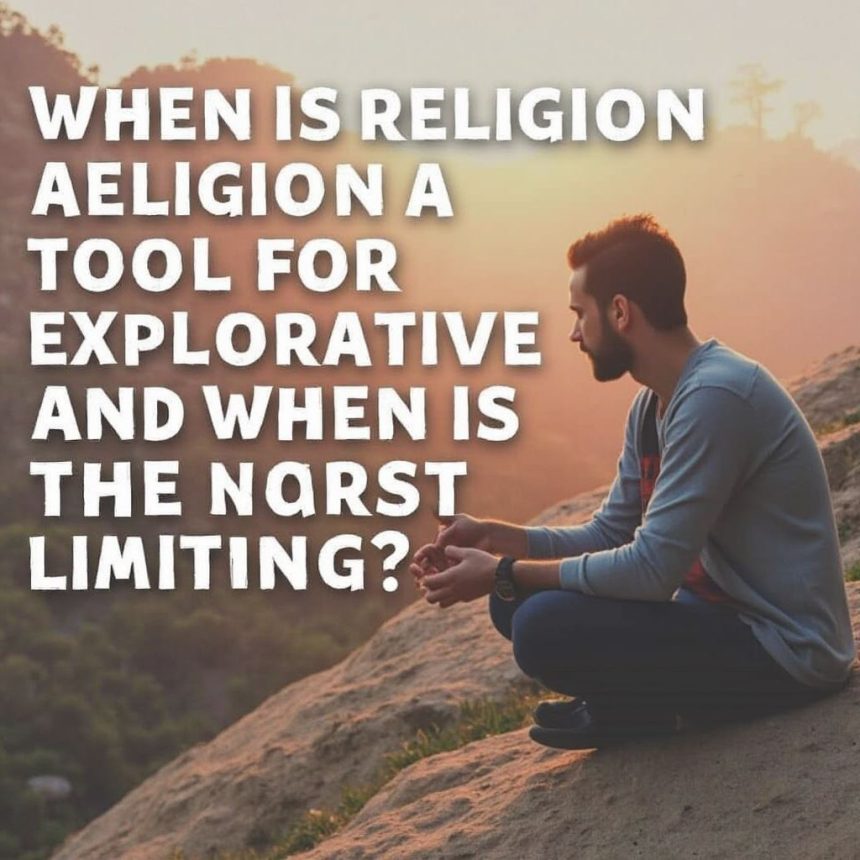
In the modern world, self-exploration and personal development are important and central values. Various religions may be a source of conflicting and contradictory views between self-exploration and religious belief. It is time to understand when religion is a tool for self-exploration and when it limits.
The relationship between religion and self-exploration may be tense in many cases. From a religious worldview perspective, self-exploration may lead to questions and doubts that challenge a person’s religious belief. On the other hand, from the perspective of the self-explorer, religion may appear as a tool that limits their search for inner truth and personal development.
The central question is when religion can serve as a tool for self-exploration and when it limits a person’s personal freedom. It is important to understand that there are different ways to integrate religious belief and self-exploration, and to create processes of personal and spiritual development.
In conclusion, it is important to remember that every person can find the right balance between religion, faith, and self-exploration. A proper tool for self-exploration can also be used in a religious worldview, leading to deep spiritual and personal development.

4. Ways to integrate religion and self-exploration positively
In today’s modern world, there are many people interested in self-exploration and understanding their personal boundaries. But to the challenging question – when is religion a tool for self-exploration and when does it limit – there are also answers. When looking at different religions in the world, it can be seen that there are ways to positively integrate religion and self-exploration.

One of the key ways to integrate religion with self-exploration is to understand that every person can reach deep understanding and self-awareness through religion. Religion can be a way to search and find oneself, as well as a tool to assist in self-exploration and understanding personal boundaries.
Another way to integrate religion with self-exploration is to listen and consult with religious or spiritual teachers who can guide and assist in the person’s inner journey. Through dialogue with wise spiritual leaders, new directions can be found and self-exploration can be deepened.
Religion can be a tool for self-exploration only when we understand that it does not contain definitive answers, but rather discussion and questions
Shlomo Cohen – Philosopher and Researcher
In summary, it can be said that there are many ways to positively integrate religion and self-exploration. Religion can be a tool for deep and profound self-exploration, as well as a way to search and find oneself. It is up to the individual to find the right way for them and to integrate their religious tradition with their personal self-exploration in a way that allows them to develop and progress spiritually.
The challenges of discovering personal boundaries in the field of religion
When we engage in self-exploration and understanding personal boundaries in the field of religion, we encounter significant challenges. Religion, in a broad sense, is a culture and belief that influences our consciousness and behavior. However, there are religious aspects that may limit personal exploration and judge our personal system.
One of the main challenges is the ability to carry religion in a way that does not limit personal exploration. When focusing on self-research, it is important to understand how to maintain a religious profile without limiting personal search and discovery. This is a deep challenge that requires high transparency and spiritual stability.
Another challenge is dealing with ancient and traditional views in the field of religion. There are principles and laws that may influence personal exploration and limit personal skills. It is important to confront this openly and work on understanding and mastering them.
In conclusion, it is important to understand that religion can be a tool for self-exploration and self-awareness, but it can also become a limitation if not approached openly and flexibly. We must maintain a stable spirit and open-mindedness to achieve the maximum benefit from personal exploration in the field of religion.